

April 5, 2020
This post is going to be all about our plans for the apple orchard. Our goal is to have a commercial orchard with about 2,500 trees. In order to get this many trees on the 2½ acre pasture, we are using a technique called High Density, Trellis Trained trees. This is a method of growing trees that has been researched and recommended by Cornell University, the experts in the field. The technique requires dwarf trees that only grow up to 12 high. Because of the trellising technique, the trees only grow to 4’ wide.
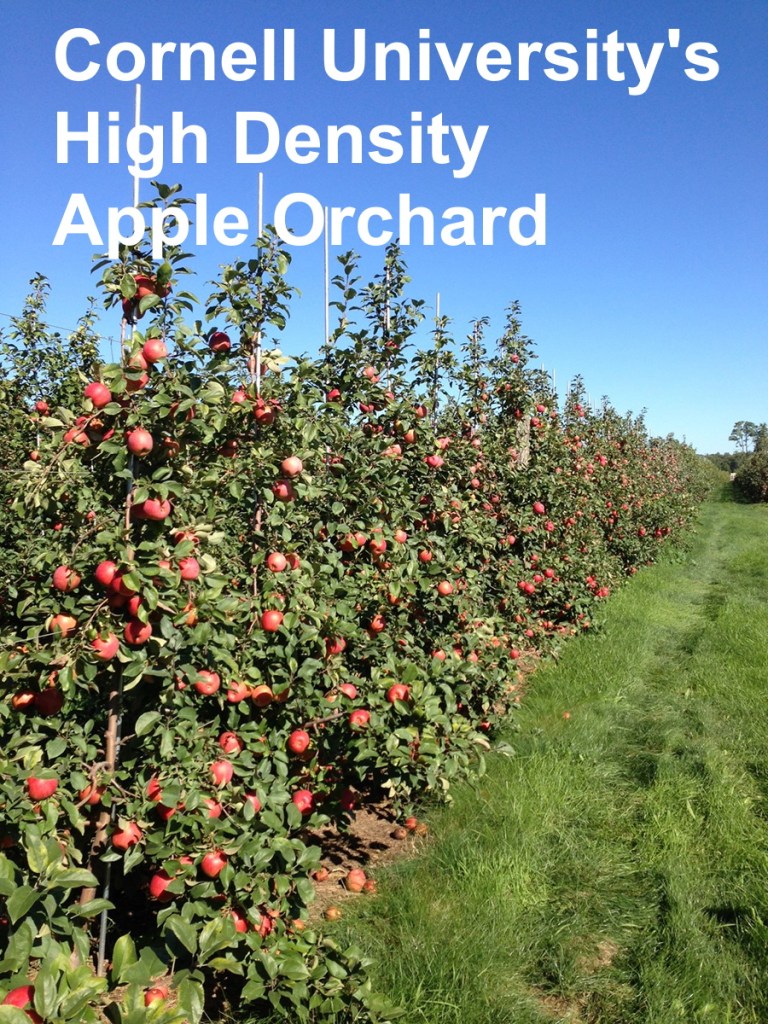
We will plant them in rows 30 inches apart from each other. There is 10’ between the rows. We will put a post on each end of the row. There will be wires stretched between the posts to support the trees. As they grow, we will prune and train the branches to produce a maximum yield. According to Cornell, we should expect 1-1½ bushels of apples per tree (about 42-63 lbs. per tree).
It took about three days to plant 30 trees. It was a very wet winter/ spring and our field is saturated. First, we dug a trench to drain some of the water. When raised the beds with the soil we pulled out of the trench along with the top soil delivered by that dump truck. We planted and mulched the trees and then put guards on them to protect them from the rabbits and voles.

The trees we chose for the High Density, Trellis Trained method are Enterprise, Harrisons, Fuji, Orange Cox, and our favorite – Newtown Pippins, which is where we got our farm’s name, Newtown Farm and Orchard. We chose these varieties for flavor, usage, and for the way they resist different diseases and pests. We will work with these trees to see which work best in our orchard.

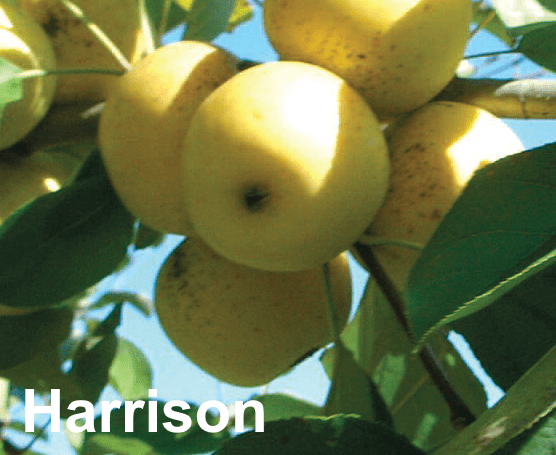
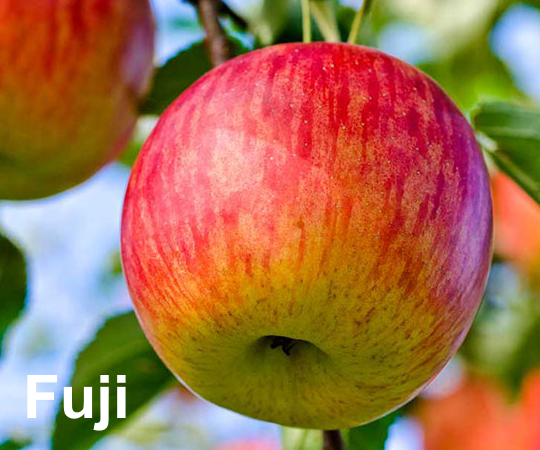

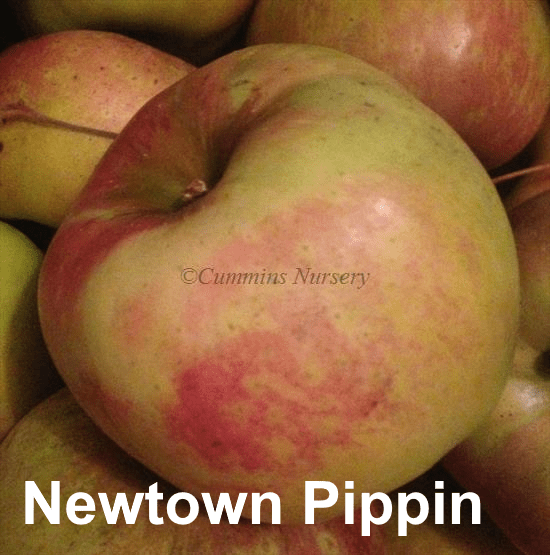
– where we purchased our trees.
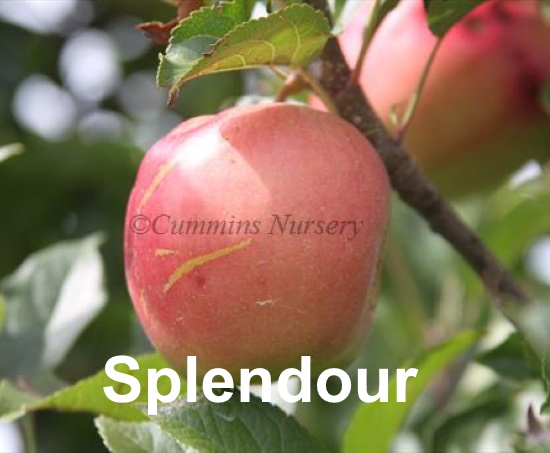
We also planted a New Zealand Splendour in our front yard. It is a semi-dwarf and should grow to about 12-15 feet.
Last but not least, we received 6 root stocks and will try our hand at grafting branches from another tree. All apple trees are grafted on to root stalks. Each root stalk has different characteristics, so we chose stocks that are particularly resistant to the threats in our area. The branches came from an Enterprise apple tree we grew in our yard at our previous house. The current owners were kind enough to let us take some cuttings.
Our goal also includes producing apples with organic practices. We would like to be certified organic. We are starting now with 30 trees to practice and get through the learning curve.
These first 30 trees should produce apples in 2 years, but it will take a 3rd year before they reach their full yield.
 Undaunted Farming